
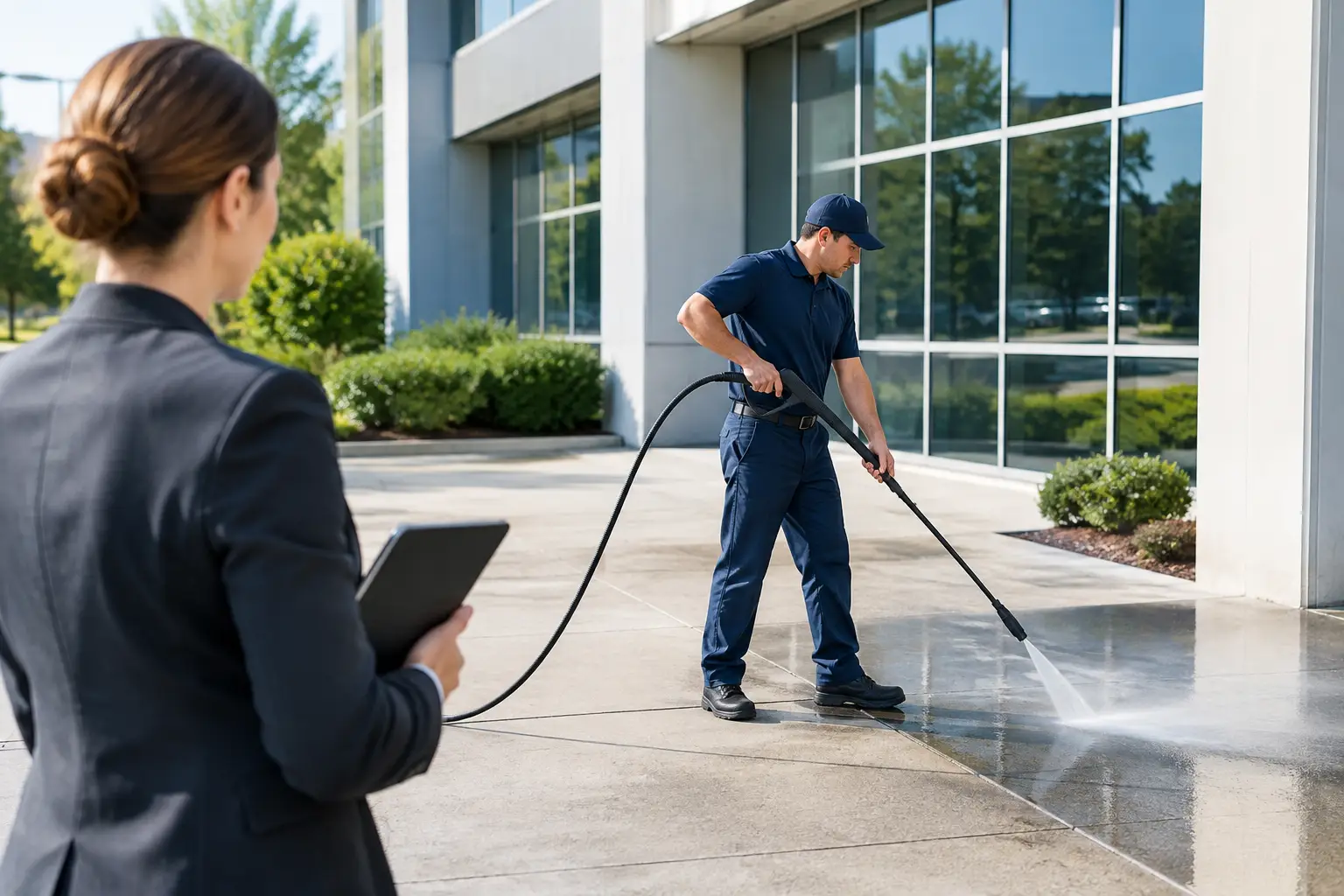
A stained entry path, oil-marked loading bay or slippery mouldy walkway is more than a presentation issue. It can affect visitor confidence, workplace safety and the condition of the property over time. This commercial pressure washing guide helps facility and property managers plan exterior cleaning that delivers visible results without creating avoidable risk, damage or disruption.
Commercial pressure washing is most effective when it is treated as part of a broader site maintenance program. The right method, equipment, cleaning solution and service timing depend on the surface, the contaminant, public access and local environmental requirements. A stronger machine is not automatically a better solution.
What commercial pressure washing should achieve
Professional high-pressure cleaning removes built-up dirt, grime, tyre marks, algae, mould, chewing gum, food spills and some oil residues from hard external surfaces. For commercial sites, the objective is usually a combination of safety, asset protection and presentation.
At a retail centre, clean footpaths and entry areas help create a positive first impression before customers reach the door. At an industrial facility, regular cleaning can reduce the build-up of slippery residues in traffic areas and make line markings, hazards and drainage points easier to see. For strata properties, it supports the appearance and longevity of shared paths, driveways, bin areas and car parks.
Results need to be measured against the condition of the surface, not just how bright it looks immediately after cleaning. Old concrete may retain deep staining. Rust, paint, efflorescence and oil that has penetrated porous concrete often require specialised treatment or a separate repair approach. A reliable provider will set clear expectations before work begins rather than promising that every mark will disappear.
Commercial pressure washing guide: start with a site assessment
A site assessment is the practical starting point for any commercial pressure washing program. It identifies what needs cleaning, what the surface can tolerate and where water will travel once cleaning begins.
The assessment should consider surface type and condition. Concrete, pavers, exposed aggregate, brickwork, coated floors, tiles, timber and metal cladding respond differently to pressure and detergents. A high-pressure setting that works on a loading dock can scar pavers, strip coatings or force water into joints and gaps elsewhere.
It should also identify the source of staining. Algae and mould need a different treatment from grease or tyre rubber. Applying pressure without suitable pre-treatment may leave the underlying contaminant behind, meaning the surface becomes dirty or slippery again sooner. In some cases, lower pressure combined with the correct cleaning agent and dwell time produces a better, safer outcome than aggressive washing.
Drainage requires equal attention. Water carrying sediment, detergents or hydrocarbons must not be allowed to flow unchecked into stormwater drains. Contractors may need to use containment, recovery equipment, drain protection or approved disposal methods, depending on the task and site requirements. This is particularly relevant around workshops, loading areas, car parks, waste zones and industrial premises.
Match the cleaning method to the area
Commercial sites rarely have one uniform exterior surface. A planned approach divides the property into zones, then applies an appropriate cleaning method to each one.
Entrances, footpaths and public areas
These areas are highly visible and often carry the greatest slip risk during wet weather. Mould, algae, drink spills and general pedestrian traffic can quickly make paths look neglected. Surface cleaners are often preferable to a pressure wand on broad paved areas because they deliver a more even finish and reduce overspray.
Cleaning should be scheduled around pedestrian activity, with barriers and clear signage in place while surfaces are wet. Early mornings, evenings or quieter trading periods may be the best fit, but the timing depends on the site’s operating hours and access arrangements.
Car parks, driveways and loading bays
Vehicle areas collect oil, tyre marks, dust, leaves and sediment. Cleaning can improve presentation and help maintain safer pedestrian crossings, ramps and access routes, yet these areas often need more than water pressure alone. Degreasing and containment may be required where oils or workshop residues are present.
Traffic management is essential. Plan for vehicle diversions, delivery schedules, access to disability parking, emergency routes and adequate drying time. Closing an entire car park may not be necessary, but cleaning in manageable sections usually reduces operational impact.
Bin rooms, waste areas and service corridors
Waste areas need a hygiene-focused approach. Leachate, food residue and odour can create sanitation concerns, attract pests and make hard surfaces slippery. Pressure washing should be combined with suitable cleaning and sanitising processes, along with responsible wastewater management.
Frequent cleaning is often more cost-effective than allowing residues to build up. A routine service also makes it easier to identify damaged drains, cracked concrete or recurring waste-handling issues before they become larger maintenance problems.
Building exteriors and sensitive surfaces
External walls, signage, awnings, façades and painted surfaces require caution. High pressure can damage joints, lift paint, force water behind cladding or harm delicate finishes. Soft washing, low-pressure cleaning or targeted hand cleaning may be the appropriate method.
The same applies near doors, air vents, electrical fittings, outdoor furniture and landscaping. A professional crew will protect adjacent assets and adjust the work method rather than using one setting across the entire site.
Safety controls are not optional
Pressure washing equipment can cause injuries and create hazards quickly. Water and debris can travel well beyond the immediate work area, while wet surfaces introduce slip risks for workers, visitors and contractors.
A commercial cleaning plan should include a task-specific risk assessment and safe work method. This should address public exclusion zones, signage, slips and trips, electrical hazards, chemical handling, hose management, vehicle movements, noise, manual handling and access near roads or building entrances. Workers need suitable personal protective equipment and training in the equipment and products being used.
For healthcare facilities, schools, childcare centres and busy retail environments, cleaning must also account for vulnerable occupants and strict access controls. Work may need to occur outside operating hours, with clear communication to site representatives before and after the service.
Do not overlook water use. High-pressure cleaning can be efficient, but a poorly managed job wastes water and creates unnecessary runoff. The goal is controlled cleaning, not simply using the highest possible pressure for the longest possible time.
Set a realistic service frequency
There is no single schedule that suits every property. Frequency depends on weather exposure, foot traffic, nearby trees, vehicle use, waste activity and the site’s required presentation standard.
A CBD office entry may benefit from scheduled cleaning every few months, particularly through wetter periods when mould and grime build up faster. A gym, childcare centre or retail precinct with heavy daily traffic may need more frequent attention to key public areas. Industrial sites may require regular cleaning of specific operational zones, while less exposed areas can be serviced less often.
Seasonal planning helps. In many Australian locations, wetter months increase algae and mould growth, while dry conditions can bring dust, leaves and grime. Rather than reacting only when a surface looks poor, schedule inspections and targeted cleaning around the conditions that affect the site.
Choosing a commercial pressure washing provider
Price matters, but it should not be the only measure. Low-cost work can become expensive if it damages surfaces, blocks access, leaves contaminated water unmanaged or requires a second contractor to correct an uneven result.
Look for a provider that can explain its approach to surface assessment, chemical selection, safety documentation and wastewater control. They should have the capacity to work around your operating hours, coordinate with building management and provide a clear scope of work. For multi-site organisations, consistent reporting and national service capability can also reduce administration and improve accountability.
It is useful to ask what is included before approving the work. Confirm the areas to be cleaned, stain treatments, access requirements, traffic management, waste handling, exclusions and expected finish. Photographic reporting can be valuable for property managers and procurement teams, particularly where work is completed outside business hours.
Perfect One Services can incorporate high-pressure cleaning into a tailored facility plan alongside sweeping, scrubbing, waste management, property maintenance and routine commercial cleaning. This reduces the need to coordinate separate providers for connected site tasks and helps maintain a consistent standard across locations.
Make exterior cleaning part of property care
Pressure washing works best when it supports, rather than replaces, routine maintenance. Clearing leaves from drains, repairing damaged paving, addressing recurring leaks and managing waste correctly all help keep exterior areas cleaner for longer. If mould returns rapidly, the answer may be shade, drainage or a moisture issue rather than more frequent washing alone.
A well-planned service protects the appearance and usability of the site while giving managers confidence that safety, access and environmental controls have been considered. Start with the areas that create the greatest risk or impression, then build a practical schedule around how your property is actually used.