
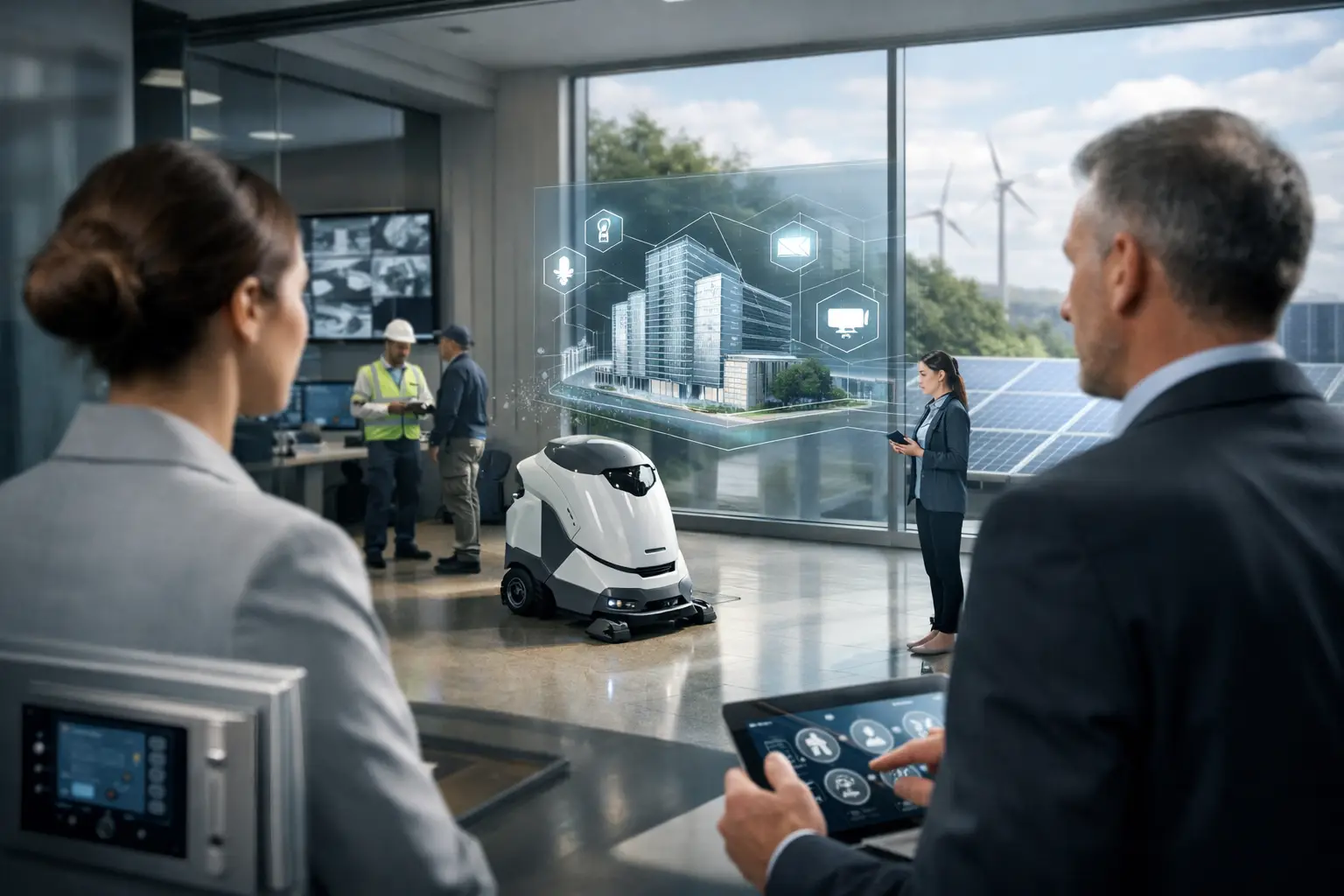
A facility issue rarely arrives on its own. A cleaning complaint can expose a staffing gap. A plumbing fault can become a hygiene risk. Missed waste collection can affect presentation, safety and tenant satisfaction in a single day. That is why the future of integrated facility services matters to Australian businesses, property managers and public sector operators – not as a trend, but as a practical response to rising expectations around compliance, cleanliness, uptime and cost control.
For many organisations, the old model of managing separate contractors for cleaning, maintenance, electrical, plumbing, waste and reactive works is becoming harder to justify. It creates fragmented reporting, blurred accountability and slower response times. Integrated facility services are moving in the opposite direction. The market is shifting towards fewer providers, clearer oversight and service models built around operational outcomes rather than isolated tasks.
What the future of integrated facility services looks like
The next phase of facilities management in Australia will be defined by consolidation, visibility and specialisation at the same time. That sounds contradictory, but it is already happening. Clients want one provider or one coordinated service model across multiple functions, yet they also expect specialist execution in areas such as infection control, trade services, compliance cleaning and high-risk environments.
This means providers will need to do more than bundle services together. They will need to coordinate them properly. Cleaning schedules will increasingly align with foot traffic patterns, maintenance cycles, tenancy demands and asset condition. Waste management will be planned alongside hygiene standards and environmental targets. Reactive works will not sit outside the main service plan. They will become part of a broader operating model with shared reporting and clearer escalation paths.
For facility managers, this is less about convenience alone and more about control. A single point of accountability can reduce admin pressure, but only if that provider has the systems, staffing depth and discipline to deliver consistently across sites and service lines.
Why clients are moving away from siloed contractors
The pressure on commercial and institutional sites has changed. Offices are expected to stay presentable with fluctuating occupancy. Healthcare and childcare settings face higher hygiene scrutiny. Retail and strata properties need fast turnaround on visible issues. Industrial sites require services that support safety as much as appearance.
In that environment, siloed contractors often create friction. One provider finishes after hours without visibility of another contractor’s work. Maintenance faults are reported late because cleaners are not connected to the service chain. Procurement teams end up managing multiple invoices, scopes and service standards across the same property.
Integrated models reduce those handover points. They can also improve site knowledge over time. When one service partner understands the building, the tenancy profile, the compliance requirements and the recurring pain points, the response tends to be faster and more practical.
That said, integration is not automatically better. It depends on provider capability. A single contractor with shallow trade coverage or weak supervision can create more risk, not less. The value comes from coordination backed by real operational depth.
Technology will matter, but only when it improves service delivery
There is plenty of noise around smart buildings, sensors and automation. Some of it is useful. Some of it is a distraction. The future of integrated facility services will certainly include more technology, but clients should judge it by one standard: does it improve outcomes on site?
Digital job tracking, asset reporting, attendance verification and service documentation are already raising the standard. For clients managing multiple locations across Sydney, Melbourne, Brisbane or Perth, visibility matters. They want to know what was completed, what was identified, what needs urgent action and where recurring issues are appearing.
Predictive maintenance tools will continue to grow, particularly for large assets and high-use buildings. But in many environments, the biggest gains will still come from disciplined basics: accurate reporting, faster escalation, cleaner communication and better scheduling.
Technology will also strengthen audit readiness. In sectors such as healthcare, education, childcare and government facilities, proof of service is nearly as important as the service itself. Providers that can document hygiene practices, maintenance actions and rectification timelines will be in a stronger position than those relying on ad hoc updates.
Hygiene and infection control are now permanent priorities
One of the clearest changes in recent years is that hygiene is no longer viewed as a background service. It is now tied directly to workplace confidence, public health expectations and business continuity.
This has changed the role of commercial cleaning within integrated facility services. Cleaning is no longer just about appearance. It supports risk management, staff wellbeing and compliance outcomes. In higher-risk environments, the difference between standard cleaning and cleaning delivered with proper infection control protocols is significant.
That shift will continue. Clients are becoming more selective about chemicals, touchpoint frequency, staff training and response procedures during outbreaks or contamination events. They also expect cleaning teams to work in step with maintenance and waste services. A leaking fixture, blocked washroom or poorly managed waste area is not just a maintenance issue. It is a hygiene issue as well.
Providers that understand those overlaps will be better placed to support schools, childcare centres, medical facilities, gyms and high-traffic commercial sites where hygiene standards affect reputation and operations every day.
Sustainability will move from reporting to day-to-day operations
Sustainability targets are becoming more common in tenders, lease agreements and procurement frameworks. But in facility services, the real test is practical execution. Clients want reduced waste, smarter resource use and service methods that support environmental goals without disrupting performance.
This will push integrated providers to think more broadly about how services connect. Waste management and recycling cannot be treated as separate add-ons. They need to align with cleaning routines, site usage and bin presentation standards. Water use matters in pressure cleaning and amenities maintenance. Product selection matters in both hygiene outcomes and environmental impact.
There are trade-offs here. The cheapest consumable or cleaning chemical is not always the most effective or the most responsible choice. On the other hand, sustainability claims that increase cost without delivering measurable value are unlikely to hold up under procurement scrutiny. The strongest service models will be the ones that balance environmental performance with operational realism.
Labour pressures will favour well-structured service partners
The facilities sector is still dealing with labour challenges, especially across specialised cleaning, trade support and after-hours coverage. For clients, this means service reliability will increasingly depend on the provider’s ability to recruit, train, supervise and retain capable teams.
This is another reason integrated services are gaining ground. A larger, better-organised provider can often deploy resources more flexibly across cleaning, maintenance support and urgent works. It can also create better continuity when a site needs extra coverage, a sudden response or a revised service plan.
For buyers, this shifts the evaluation criteria. Price will always matter, but labour structure, supervision and service resilience matter just as much. A lower quote can become expensive very quickly if missed cleans, delayed reactive works and inconsistent staffing start affecting the site.
What Australian buyers should look for next
As the market evolves, the strongest integrated facility service partnerships will be built on a few practical foundations. The provider should be able to tailor service plans to the site rather than forcing a standard package. It should have enough breadth to handle cleaning, maintenance and support services under one roof, but enough discipline to maintain quality in each area. It should also be clear about reporting, escalation and compliance responsibilities from day one.
National or multi-city capability will matter more for organisations with portfolios across Australia. So will 24/7 responsiveness, especially where sites operate beyond standard business hours or support the public directly. For many clients, consistency across locations is just as valuable as technical capability on a single site.
This is where experienced operators stand apart. A provider such as Perfect One Services Australia is not just supplying labour to complete tasks. It is helping clients reduce contractor complexity, protect presentation standards, maintain safer environments and keep facilities working as they should.
The future of integrated facility services will not be shaped by flashy promises. It will be shaped by providers who can deliver clean sites, functioning assets, reliable reporting and accountable service across every stage of the day. For facility leaders, that future is already taking shape – and the smartest move is to choose partners built for it.